
Organic Fertilizer for Plants in Pakistan: Compost, Vermicompost, Bone Meal & Bio-Fertilizer
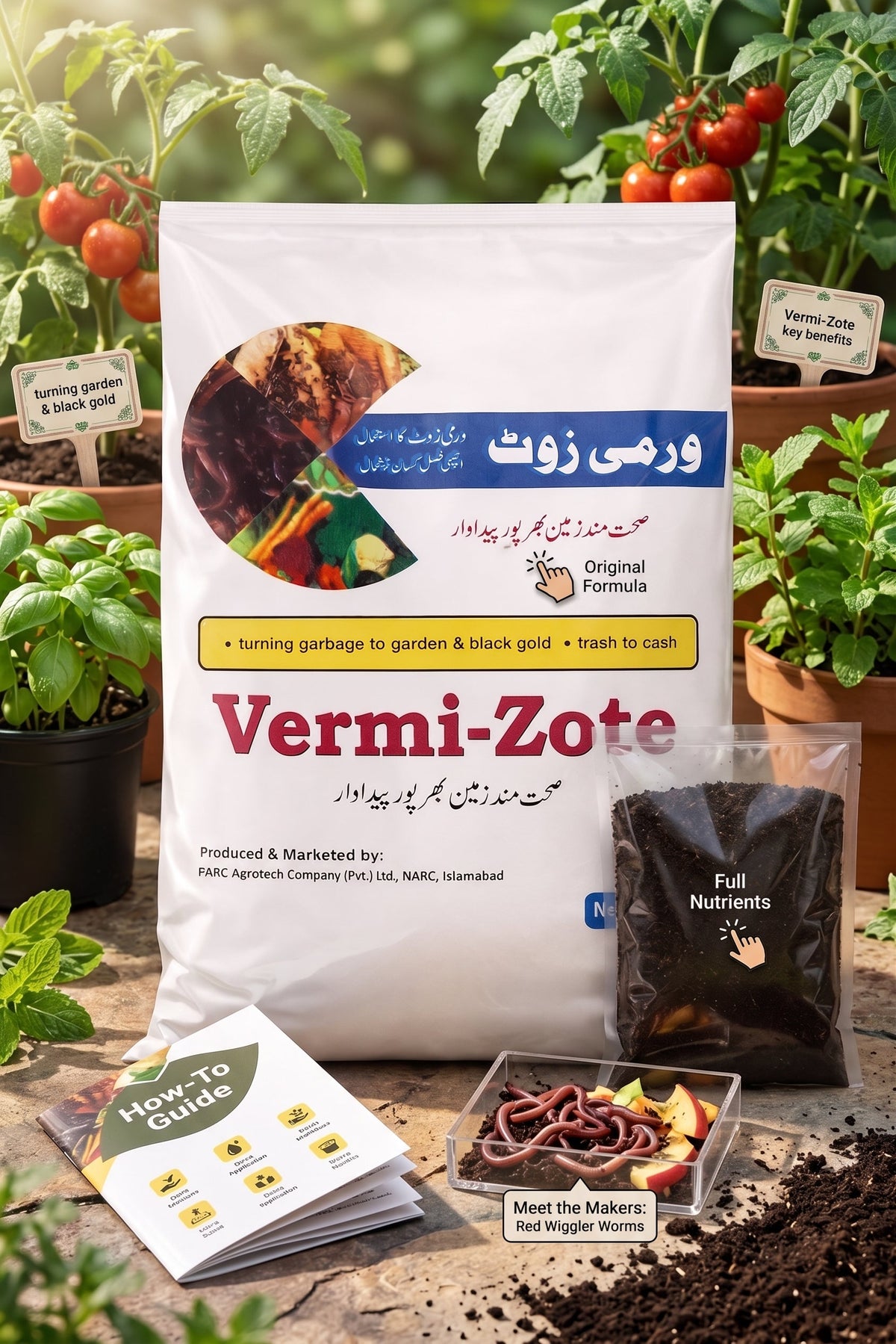
Organic fertilizer feeds your plants by feeding the soil first. Instead of a quick chemical dose, organic fertilizers such as compost, vermicompost, bone meal and bio-fertilizers release nutrients slowly, improve the structure of the soil and support the tiny living things that keep it healthy. Whether you grow tomatoes on a Lahore rooftop, roses in a Karachi courtyard or chickpeas on a farm in Punjab, choosing the right organic fertilizer for plants makes a visible difference.
What makes a fertilizer "organic"?
An organic fertilizer comes from living or once-living material — plant matter, animal manure, worm castings, bones or beneficial microbes. Chemical fertilizers (urea, DAP and the like) supply concentrated nutrients that plants take up quickly, but they do nothing for soil structure and are easy to overuse. Organic fertilizers work more gently: they add organic matter (humus), help sandy soil hold water, loosen heavy clay, and keep feeding plants over weeks rather than days.
Many gardeners in Pakistan use both: organic matter to build the soil, and a little chemical fertilizer only when a crop needs a quick boost. If you want a fully natural kitchen garden, organic fertilizer alone is enough for most vegetables and flowers.
Compost: the everyday organic fertilizer
Compost (khaad) is decomposed plant and kitchen material — leaves, vegetable peels, grass and manure — broken down by microbes into a dark, crumbly, earthy-smelling material. It is the most versatile organic fertilizer you can use.
- Best for: pots, new beds, lawns, kitchen gardens, fruit trees and potting mix.
- How much: as a general guide, about one part compost to three parts soil for pots and new beds, or a 2–3 cm layer around established plants.
- Why it helps: it improves soil structure, water holding and nutrient supply all at once.
You can make compost at home (see our home compost guide) or buy it ready to use. PARC Compost comes in a 5 kg bag for Rs 750.
Vermicompost: richer, finer, worm-made
Vermicompost is produced when earthworms eat organic waste and leave behind their castings. The result is finer and richer than ordinary compost, with a soft, crumbly texture that mixes easily into soil.
- Best for: seedlings, nurseries, vegetables, flowers and potted plants.
- How much: because it is concentrated, use roughly one part vermicompost to four parts soil, or a thin layer around plants.
- Why it helps: it gives young plants a gentle, steady feed and is not known to burn roots the way strong chemical fertilizers can.
PARC Vermi-zote is pure worm-cast vermicompost in a 5 kg bag for Rs 1,100.
Bone meal fertilizer: what it is and when to use it
Bone meal is made from ground, steamed animal bones. It is mainly a source of phosphorus and calcium, which support roots, flowers and fruit, and it releases these slowly over the season. Gardeners often add a little to the planting hole for bulbs, roses and fruiting plants.
Bone meal is not a complete fertilizer — it supplies very little nitrogen — so it is usually combined with compost. It is also an animal product, which some gardeners prefer to avoid. We do not sell bone meal; if you would like a plant-based, animal-free option, compost and vermicompost cover the needs of most home gardens on their own.
Bio-fertilizer: help for legumes
A bio-fertilizer contains beneficial living microbes rather than nutrients. For legumes — chana (chickpea), masoor (lentil), mung, peas, beans and groundnut — certain bacteria live in root nodules and help the plant take nitrogen from the air. Treating the seed with the right bio-fertilizer before sowing supports this natural process and stronger root growth.
PARC Biozote Max is a bio-fertilizer for legumes (500 g, Rs 1,050). Always follow the seed-treatment directions printed on the pack, and keep it in a cool, shaded place because it contains living microbes.
Which organic fertilizer should you choose?
- Starting a new pot or bed: mix compost or vermicompost into the soil before planting.
- Feeding plants already growing: top-dress with a thin layer of compost every couple of months in the growing season.
- Raising seedlings: use vermicompost in the seedling mix.
- Growing pulses or beans: treat the seed with a bio-fertilizer such as Biozote Max and prepare the soil with compost.
- Flowering and fruiting plants: compost plus a little bone meal (if you use animal products) at planting time.
Tips for using organic fertilizer in Pakistan's climate
- In the summer heat, water after adding compost and mulch the surface with dry leaves so the soil does not bake.
- During the monsoon, avoid piling compost against stems, where constant moisture can cause rot.
- Feed vegetables at the start of each season — before sowing winter vegetables in October–November and summer vegetables in February–March.
- Store bags closed, in the shade and off the ground.
Frequently asked questions
Is organic fertilizer better than chemical fertilizer?
They do different jobs. Chemical fertilizer gives a fast nutrient boost; organic fertilizer feeds plants more slowly while building healthy soil. For home gardens and anyone aiming for organic farming, organic fertilizer is the better long-term choice.
How often should I add compost to pots?
Mix it in when potting, then add a thin top layer every two to three months during the growing season.
Can I use too much organic fertilizer?
It is much harder to overdo than chemical fertilizer, but very rich mixes can keep soil too wet. Follow the rough ratios above.
What is the price of organic fertilizer in Pakistan?
At Khalis Bazar, PARC Compost is Rs 750 for 5 kg, Vermi-zote vermicompost Rs 1,100 for 5 kg and Biozote Max Rs 1,050 for 500 g, with free delivery.
Buy organic fertilizer online
Find compost, vermicompost and bio-fertilizer in our Organic Fertilizer & Farming collection. Delivery is free anywhere in Pakistan and you pay Cash on Delivery.
