
How to Make Garden Compost at Home: A Simple Home Composter Guide
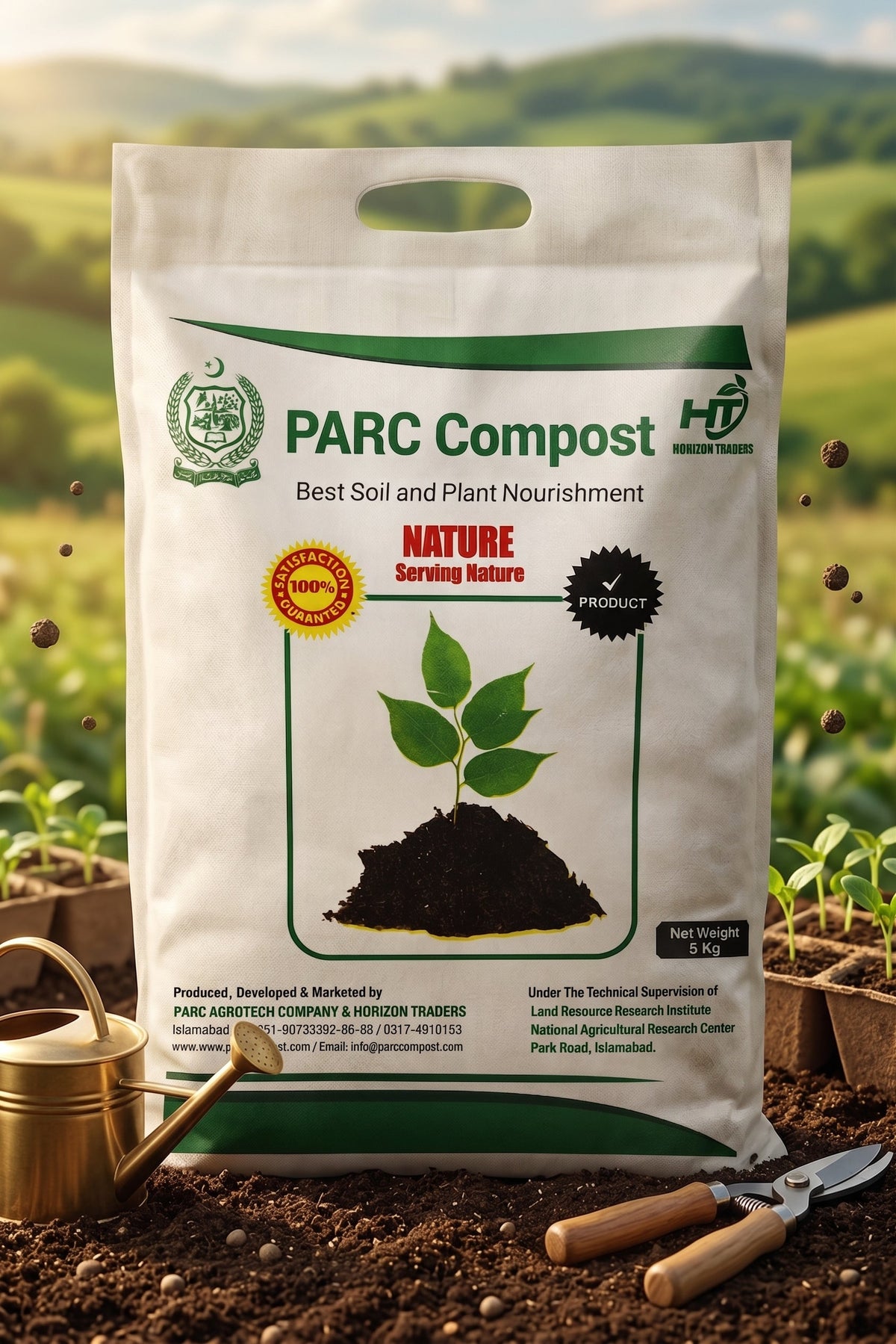
Making garden compost at home is one of the easiest ways to start organic gardening. Every week a Pakistani household throws away vegetable peels, tea leaves and fruit scraps that could become free, rich organic compost for your plants. With a simple home composter — a bin, a drum or even a corner of the garden — you can turn that waste into dark, crumbly khaad in two to four months.
What is compost and why make it?
Compost is organic matter that microbes have broken down into a soil-like material. Added to pots and beds, it improves soil structure, helps the soil hold water through the summer, and feeds plants slowly. Making it yourself reduces kitchen waste and saves money on fertilizer.
Choosing a home composter
- Plastic drum or bucket: drill small holes around the sides and bottom for air and drainage, and keep a lid on. Ideal for rooftops and small spaces.
- Two-bin system: fill one bin while the other finishes. Good for families with more garden waste.
- Open heap or pit: a corner of the garden works if you have space; cover it to keep rain and animals out.
- Clay pots (matka) stacked with holes: a traditional, low-cost option that stays cooler in summer.
Whatever you use, place it in partial shade, close enough to the kitchen that you will actually use it.
What to put in — greens and browns
Good compost needs a mix of "greens" (moist, nitrogen-rich material) and "browns" (dry, carbon-rich material). Aim for roughly two to three parts browns to one part greens by volume.
- Greens: vegetable and fruit peels, used tea leaves and coffee grounds, fresh grass clippings, plant trimmings, cow or goat manure.
- Browns: dry leaves, shredded newspaper and cardboard (without shiny coating), straw, sawdust from untreated wood, dry twigs broken small.
Leave out: meat, fish, bones, dairy, cooked oily food, pet waste, diseased plants and weeds with seeds. These attract pests, smell bad or spread problems.
Step by step
- Start with a layer of twigs or dry leaves at the bottom for airflow.
- Add kitchen greens, then cover them with an equal or larger layer of browns. Covering greens prevents smells and flies.
- Keep the mix as moist as a squeezed-out sponge — sprinkle water if it is dry.
- Turn or stir the contents once a week to let air in; this speeds everything up.
- Chop large pieces small; smaller pieces break down faster.
- When the bin is full, stop adding and let it finish for four to eight weeks.
Compost is ready when it is dark brown, crumbly and smells like earth, and you can no longer recognise the original scraps.
Composting in Pakistan's climate
- Summer: heat speeds up composting, but the pile dries quickly. Keep it shaded, water it more often and keep the lid on.
- Monsoon: heavy rain can make the pile soggy and smelly. Cover it and add extra dry leaves or paper.
- Winter: composting slows down in the cold. Make the pile bigger or insulate the bin with sacks; it will pick up again in spring.
Fixing common problems
- Bad smell: too many greens or too wet — add browns and turn it.
- Nothing happening: too dry or too many browns — add water and fresh greens.
- Flies or ants: bury food scraps under browns; ants usually mean the pile is too dry.
How to use your compost
Sieve out large pieces (put them back in the bin), then mix about one part compost with three parts soil for pots and new beds, or spread a thin layer around plants. Homemade compost takes months; while your first batch matures, ready-made PARC Compost or richer Vermi-zote vermicompost keeps your plants growing.
Frequently asked questions
How long does home compost take?
Usually two to four months in warm weather if you turn it weekly, and longer in winter.
Can I compost on a flat or rooftop?
Yes — a closed drum or bucket with small air holes works well and does not smell if you cover every layer of scraps with dry material.
Is homemade compost an organic fertilizer?
Yes. Compost is one of the most useful organic fertilizers and soil conditioners there is.
Ready-made compost
Short on time or space? Browse compost, vermicompost and bio-fertilizer in our Organic Fertilizer & Farming collection — free delivery anywhere in Pakistan, Cash on Delivery. For choosing between fertilizers, read our organic fertilizer guide.
